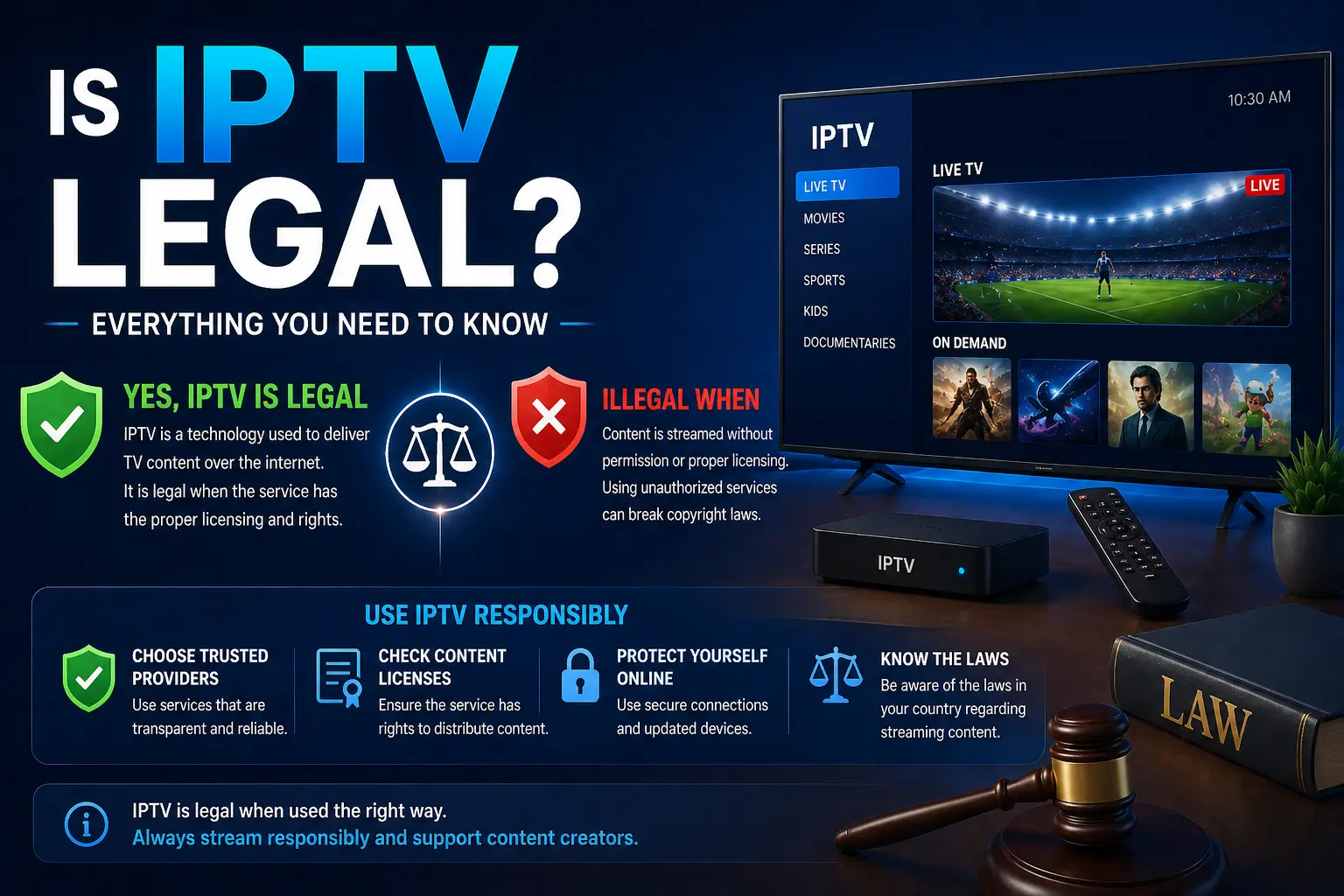
IPTV has become one of the most talked-about ways to stream television content online. But with its growing popularity, many users are asking an important question: is IPTV legal?
The answer isn’t as simple as yes or no. IPTV itself is a technology, and like many technologies, its legality depends on how it is used. In this guide, we’ll break down everything you need to know about IPTV legality, how it works, and how to stay on the safe side.
What Is IPTV?
Before diving into legality, it’s important to understand what IPTV actually is.
IPTV (Internet Protocol Television) is a system that delivers television content over the internet instead of traditional cable or satellite systems. You can learn more in our detailed guide on what IPTV is and how it works.
This technology is widely used across many legitimate streaming platforms and services.
Is IPTV Legal?
Yes, IPTV is legal — but only when it is used to stream content that is properly licensed.
Many well-known platforms use IPTV technology to deliver content to users. For example:
These services operate legally because they have the rights to distribute the content they offer.
When IPTV Is Legal
- The service has proper licensing agreements
- The content is legally distributed
- The provider complies with local laws
When IPTV May Be Illegal
- Streaming copyrighted content without permission
- Using services that do not have distribution rights
- Accessing pirated or unauthorized streams
How IPTV Licensing Works
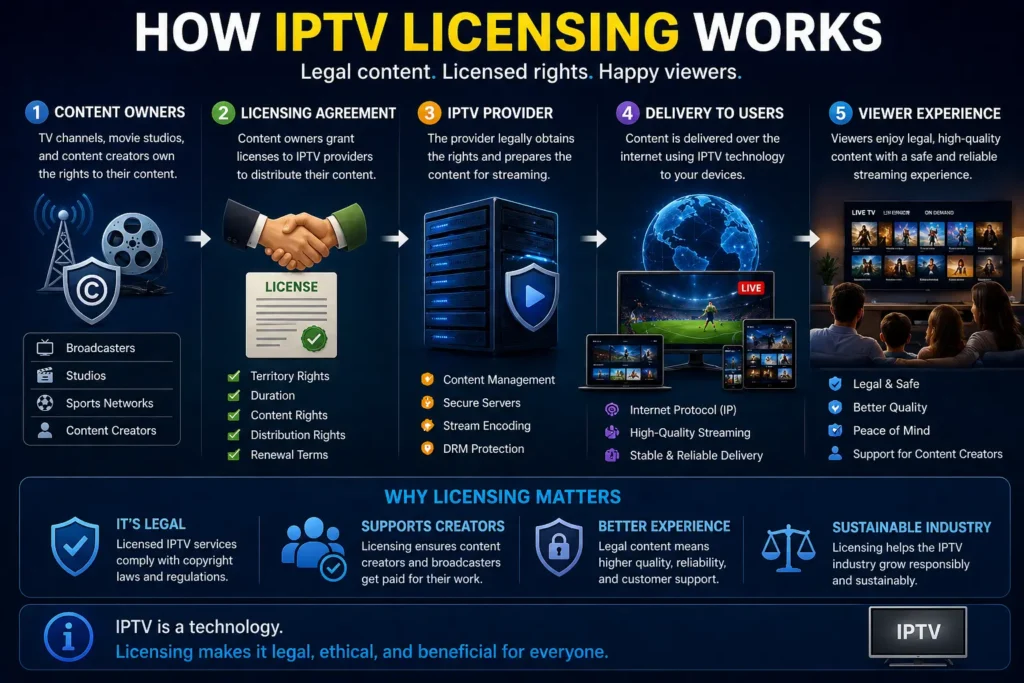
Content licensing is a key factor in IPTV legality.
Media companies, broadcasters, and content creators own the rights to distribute their content. IPTV providers must obtain licenses to legally stream these channels and programs.
According to World Intellectual Property Organization (WIPO), copyright laws protect how content is distributed and accessed worldwide.
If a provider does not have proper licensing agreements, the service may be considered unauthorized.
Is It Illegal to Use IPTV?
Using IPTV is not illegal in itself. However, legality depends on the source of the content you are accessing.
In many regions, laws focus more on providers distributing illegal content rather than individual users. However, accessing unauthorized content can still carry risks depending on local regulations.
Factors That Affect Legality
- Your country’s copyright laws
- The IPTV provider you use
- The type of content being streamed
How to Tell If an IPTV Service Is Legal
Not all IPTV services are the same. Here are some signs that can help you identify whether a service is likely legitimate.
1. Transparency
Legal services clearly explain their offerings, terms, and business information.
2. Pricing Structure
If a service offers thousands of premium channels at extremely low prices, it may be a red flag.
3. Official Apps and Platforms
Legitimate IPTV services are often available on official app stores such as Google Play or Apple App Store.
4. Customer Support
Reliable services provide proper support channels. You can always reach us through our Contact page for assistance.
Risks of Using Unauthorized IPTV Services
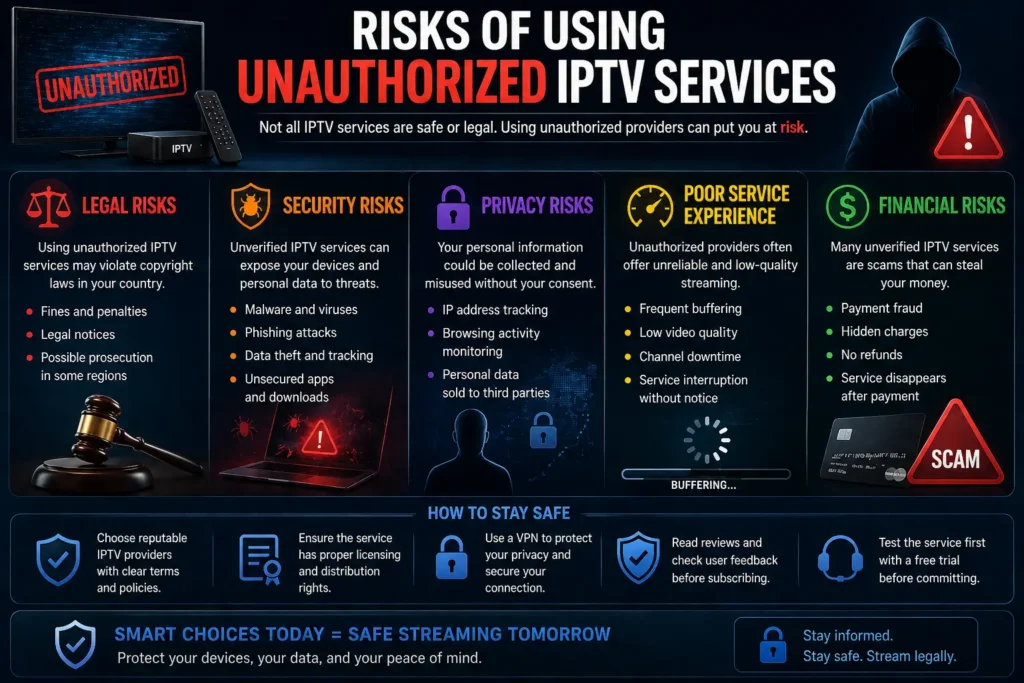
Using unauthorized IPTV services can come with several risks.
Legal Risks
- Possible violation of copyright laws
- Potential legal consequences depending on location
Security Risks
- Exposure to malware or harmful software
- Data privacy concerns
- Unsecured payment systems
Service Reliability
- Frequent downtime
- Poor streaming quality
- Sudden service shutdowns
How to Use IPTV Safely
If you want to use IPTV responsibly, there are a few important guidelines to follow.
Choose Trusted Services
Always choose providers that offer transparency and clear service terms.
Test Before Committing
If available, you can start with a free IPTV trial to evaluate the service before making a decision.
Use Secure Devices
Keep your apps and devices updated to ensure security and performance.
Understand Local Laws
Always check your country’s regulations regarding streaming services.
You can find general consumer protection information on sites like Federal Trade Commission (FTC).
IPTV vs Traditional Streaming Services
IPTV and traditional streaming platforms differ in several ways.
- IPTV: Can include live TV and on-demand content
- Streaming Platforms: Typically focus on licensed on-demand content
- Flexibility: IPTV often combines multiple viewing formats
Common Misconceptions About IPTV
“All IPTV Is Illegal”
This is false. IPTV is simply a delivery method and is widely used by legitimate companies.
“Free IPTV Means Legal IPTV”
Free access does not always mean content is licensed.
“Using IPTV Guarantees Legal Issues”
This depends entirely on the provider and how the service is used.
Final Thoughts
IPTV is a powerful and flexible way to stream content, but its legality depends on how the technology is used.
By choosing reliable services, understanding licensing, and staying informed about local regulations, you can enjoy IPTV safely and responsibly.
If you’re new to IPTV and want to explore how it works, you can visit our homepage or try a free IPTV trial to get started.